

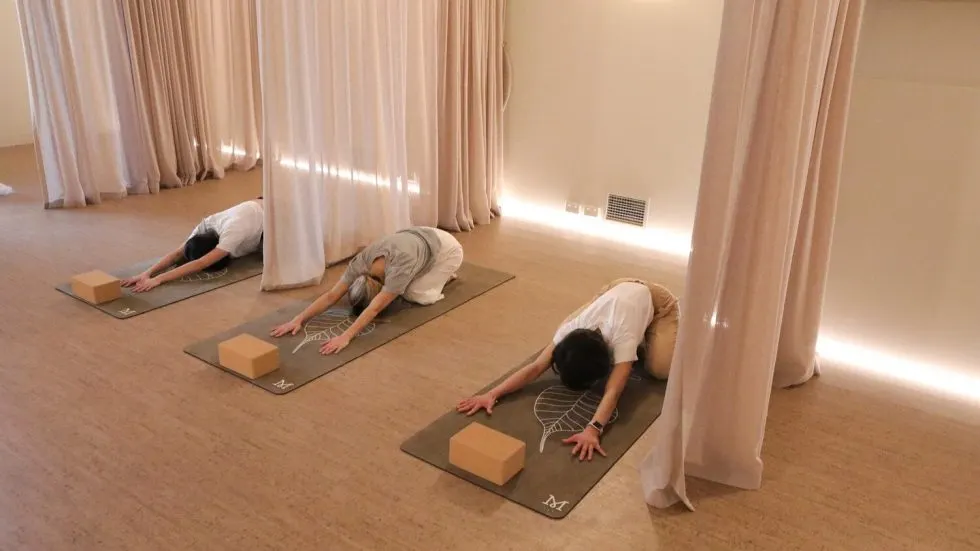
If you are seriously stressed and the idea of a sweaty, fast-moving yoga class makes you want to stay on the couch, yin yoga is the practice you have been looking for. It is slow, it is done almost entirely on the floor, and it asks you to hold each posture for minutes rather than breaths. That is what makes it the most relaxing style of yoga there is, and the closest thing to meditation for people who have never managed to meditate.
What is yin yoga?
Yin is a slow-paced, therapeutic style of yoga built around a small number of passive floor postures, each held for three to five minutes, sometimes longer. There are no planks, warriors or standing sequences. You settle into a shape, use props to support it, and let gravity and time do the work while you turn your attention inward.
The name comes from the Taoist idea of yin and yang. Yang is movement, heat and effort, which is most exercise and most yoga. Yin is stillness, cooling and receiving. We need both to stay balanced, and most of us have far too much yang in our lives already. (If that idea interests you, read work-life balance with yin and yang.)
A common misconception is that yin is a fitness practice. It is not. Plenty of things will get you fit; yin is for the parts of you that fitness cannot reach.
What to expect in a class
You will spend the hour on a mat with a bolster, blocks and a blanket. The teacher guides you into a posture, helps you find the edge where you feel a gentle stretch, and then you stay there, breathing, while the body slowly softens. There is no pushing and no straining. Between postures you rest. Where dynamic styles work the surface muscles, yin reaches the deeper connective tissue: fascia, ligaments and the tissue around the joints. Students often describe it as an internal massage.
The long holds are where the meditation happens. Your mind will wander and get bored, and coming back to the sensation and the breath, again and again, is exactly the training. That is also why it is the entry point we recommend to people who have written off meditation. For more on that, see our guide to the types of meditation.
8 benefits of yin yoga for relaxation
1. It calms the nervous system
Long, still holds with slow breathing switch the body from the sympathetic “fight or flight” state into the parasympathetic “rest and digest” state. Heart rate drops, muscles let go, and the mind follows. This is the benefit everything else on this list flows from.
2. It releases tension that stretching cannot
Sitting shortens the hip flexors and rounds the shoulders, and quick stretches barely touch the fascia that holds those patterns in place. Yin’s slow, sustained loading gives connective tissue time to change. People feel it most in the hips, lower back and chest.
3. It improves flexibility and joint health
Gentle, regular stress on the joints and the tissue around them keeps them mobile and lubricated. Yin is especially valuable as we age and as desk work stiffens us.
4. It is meditation you can actually do
Three minutes of stillness in a supported posture is, for most people, far easier than three minutes of sitting on a cushion with nothing to do. Yin trains attention without calling it meditation.
5. It helps you sleep
An evening yin class is one of the most reliable sleep aids we know. The nervous system is already settled by the time you get home. Pair it with the practices in our guide to improving sleep quality.
6. It builds patience and emotional resilience
Staying with mild discomfort, breathing through the urge to move, and noticing the mind’s complaints without acting on them is a skill that transfers directly to a difficult meeting or a hard week.
7. It supports circulation and energy flow
In the Chinese medicine view that underpins yin, the postures stimulate the meridians that run through the connective tissue. In Western terms, compressing and releasing tissue moves fluid and blood. Either way, students leave feeling lighter and more awake, not depleted.
8. It is for every body
Yin does not care how flexible, fit or experienced you are. Props make every posture accessible, and the teacher adapts the shape to you. It is the class we point people to first when they say they are too stiff, too busy or too stressed for yoga.
Who yin yoga suits
Busy-minded professionals who cannot switch off. Anyone recovering from burnout. People with tight hips and backs from sitting. Athletes needing balance to hard training. And anyone who has tried meditation and given up. If you recognise yourself, come and lie down with us.
Yin yoga is part of our in-person class program in South Melbourne, and it pairs beautifully with sound meditation if you want the deepest rest available in an hour. Check the class timetable for this week’s sessions.